
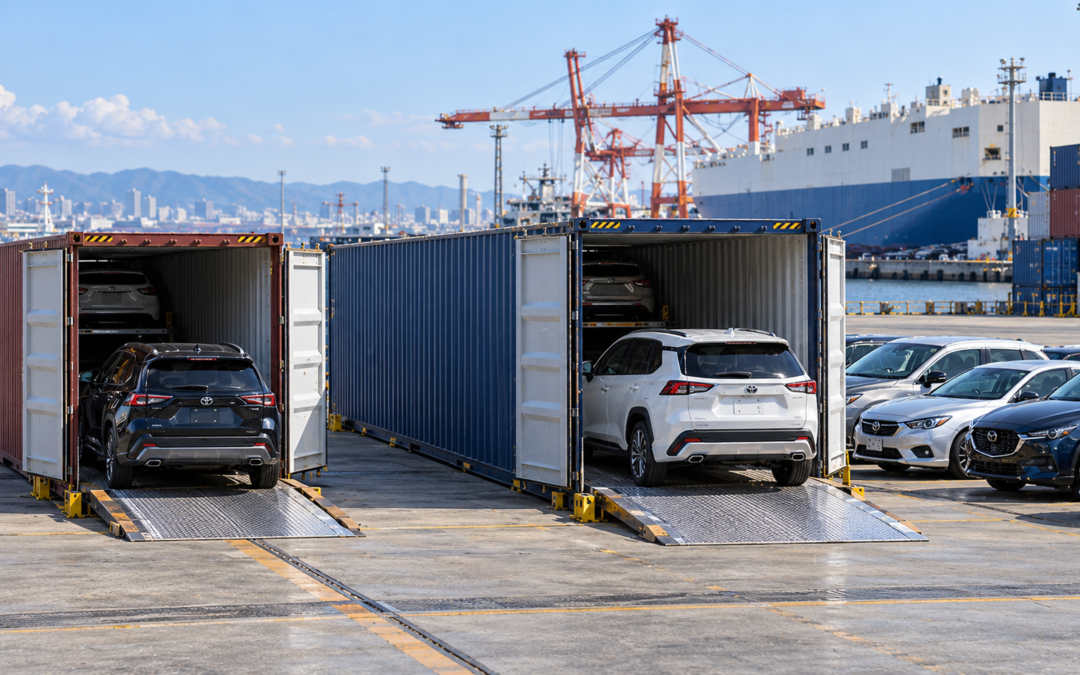
20ft vs. 40ft Shipping Containers: How Many Cars Can You Export from Japan?
Choosing the right shipping container is an important part of exporting cars from Japan. Whether you are an individual buyer importing a vehicle or a dealer shipping multiple cars, the container size can influence loading arrangements, shipping expenses, and overall logistics planning.
The two common container options are 20ft and 40ft containers. Although a 40ft container provides more floor space, the number of vehicles it can accommodate depends on their dimensions, loading configuration, and operational restrictions.
IK Logistics Japan provides vehicle logistics and container-related services to support international vehicle exports. This guide explains the differences between 20ft and 40ft containers and the factors to consider before arranging a shipment.
1. What Is the Difference Between a 20ft and a 40ft Shipping Container?
A 20ft container and a 40ft container differ primarily in their length, internal capacity, and suitability for different cargo arrangements. Both are widely used in international shipping, although exact dimensions vary by container type and manufacturer.
A standard 20ft container typically has internal dimensions of approximately 5.9 metres long, 2.35 metres wide, and 2.39 metres high. A standard 40ft container is approximately 12.0 metres long, 2.35 metres wide, and 2.39 metres high internally.
These figures are approximate and should be confirmed with the shipping provider. High-cube containers offer additional internal height, while door openings, structural features, and usable loading space can affect vehicle placement.
A 20ft container may be suitable for a smaller shipment or certain individual vehicle arrangements. A 40ft container provides a longer loading area and may accommodate more vehicles, depending on their sizes and how they are positioned.
However, container selection should not be based on length alone. Buyers must also consider vehicle dimensions, door clearance, permitted cargo weight, loading equipment, securing arrangements, and the container’s applicable weight limits.
2. How Many Cars Can Fit in a 20ft or 40ft Container?
The number of cars that can fit inside a shipping container depends on several variables. Vehicle length, width, height, wheelbase, ground clearance, and loading orientation all influence the available space.
As a general planning guide, a 20ft container may accommodate one standard passenger car, while a 40ft container may accommodate two or more vehicles. In suitable circumstances, specialist loading configurations can allow additional vehicles to be carried. Actual capacity must be confirmed for the specific vehicles and loading plan.
Consider the following factors when estimating capacity:
-
Vehicle size: Compact hatchbacks require less space than large SUVs, vans, or pickups.
-
Vehicle dimensions: Two cars may fit differently depending on their overall lengths, widths, heights, and shapes.
-
Loading configuration: The arrangement of vehicles and the equipment used can affect how efficiently the available space is utilized.
-
Loading and unloading requirements: Vehicles must be positioned safely, with adequate access for the loading operation.
-
Weight restrictions: The combined cargo weight must remain within the container’s applicable payload and transport limits.
-
Securing requirements: Vehicles must be adequately secured to reduce movement and the risk of damage during transit.
Never assume that a container can accommodate a particular number of cars based only on its external dimensions. Request a vehicle-specific loading assessment before confirming your shipment.
3. 20ft vs. 40ft Containers: Which Option Is Better for Car Exports?
The best container depends on how many vehicles you intend to ship, their dimensions, your destination, and the overall cost of the shipment.
A 20ft container may be worth considering when shipping a single vehicle or a smaller cargo load, provided the vehicle can be safely accommodated. It can also be appropriate when the shipment’s requirements do not justify a larger container.
A 40ft container may be more suitable for dealers and exporters shipping multiple vehicles together. Its additional length offers greater loading flexibility, although the actual capacity depends on the selected vehicles and approved loading arrangement.
When comparing the options, evaluate the total shipping cost rather than looking only at the container size. A larger container does not automatically produce savings if you cannot use its available space efficiently.
You should also compare freight charges, container availability, port handling, loading costs, vehicle collection expenses, and any destination-related charges. The most economical arrangement will depend on your particular route and shipment.
For some vehicles and destinations, RoRo shipping may also be worth considering. This method involves eligible vehicles being driven onto and off a suitable vessel. Its availability and suitability depend on the route, vessel service, vehicle condition, and shipping requirements.
4. What Should You Check Before Loading Cars into a Shipping Container?
Proper preparation helps reduce avoidable delays, loading difficulties, and the risk of vehicle damage during transport.
Before loading begins, confirm the dimensions and condition of every vehicle. Check that the selected container can accommodate the planned arrangement and that the combined cargo weight complies with the relevant restrictions.
Important checks include:
-
Vehicle measurements: Confirm each vehicle’s length, width, and height, including any accessories that affect its dimensions.
-
Container condition: Check for visible damage, water ingress, obstructions, and other issues that could affect cargo protection.
-
Loading access: Confirm that vehicles and loading equipment can enter and exit the container safely.
-
Vehicle condition records: Photograph vehicles before loading and document any existing damage.
-
Securing arrangements: Ensure that suitable restraint equipment and approved securing methods are used.
-
Shipping documentation: Confirm that the vehicle details, chassis or frame numbers, shipping instructions, and relevant export documents are accurate.
-
Destination requirements: Verify any applicable import rules, documentation requirements, and vehicle restrictions before shipment.
Loading should be planned and carried out by personnel with the appropriate experience and equipment. Improvised stacking or unsafe positioning can damage vehicles and create serious handling risks.
For multi-vehicle shipments, request confirmation of the proposed loading arrangement before finalizing the booking.
5. How to Arrange Container Booking and Vehicle Shipping from Japan
Once you have selected your vehicles and identified a suitable container, the next step is coordinating the shipping process.
Start by preparing the vehicle details, destination port, preferred shipping method, and any relevant collection or delivery requirements. These details help the logistics provider assess the shipment and determine the available arrangements.
Next, obtain a quotation that clearly identifies the services included. Depending on your agreement, the costs may cover container booking, domestic transportation, loading, port handling, export documentation, and international freight. Confirm which services are included and which must be arranged separately.
You should also discuss the estimated shipping schedule, documentation deadlines, vehicle delivery arrangements, and any special requirements. Schedules can change because of vessel availability, port operations, documentation issues, or other operational factors.
IK Logistics Japan offers container booking and vehicle logistics services relevant to international car exports. Visit the Container Booking service page and the Container Vanning & Vehicle Loading page to learn more about the relevant services.
Plan Your Vehicle Shipment with IK Logistics Japan
Selecting between a 20ft and a 40ft container requires careful consideration of vehicle dimensions, loading arrangements, cargo weight, destination, and total logistics costs.
A smaller container may suit a limited shipment, while a larger container can provide additional space for multiple vehicles when the loading configuration permits. The most appropriate option is the one that meets your shipping requirements safely and economically.
If you are planning to export vehicles from Japan, contact IK Logistics Japan to discuss your shipment details and request information about available container booking and vehicle loading arrangements. Visit the IK Logistics Japan homepage to explore the company’s services.
How many cars can fit in a 20ft shipping container?
A 20ft shipping container may accommodate one standard passenger car, depending on its dimensions, the available internal space, loading access, and securing requirements. Confirm the vehicle-specific loading plan with your logistics provider before booking.
How many cars can fit in a 40ft shipping container?
A 40ft container may accommodate two or more passenger vehicles, depending on their dimensions and the loading configuration. The exact number must be assessed against available space, vehicle weight, loading equipment, and safety requirements.
Is a 20ft or 40ft container better for exporting cars from Japan?
A 20ft container may suit a smaller shipment, while a 40ft container can provide greater capacity for multiple vehicles. The best choice depends on vehicle size, shipment quantity, route availability, and the total cost of transportation.
What affects the cost of shipping cars in a container from Japan?
Shipping costs can depend on container size, vehicle collection, loading, port handling, freight rates, documentation, insurance, destination charges, and the number and dimensions of the vehicles. Request a quotation based on your specific shipment.
Can IK Logistics Japan help with container booking and vehicle loading?
IK Logistics Japan lists container booking and container vanning and vehicle loading among its service areas. Contact the company to confirm current availability, vehicle capacity, applicable charges, and arrangements for your intended destination.